Psychiatric Care, TMS Programs, Electrophysiological (EDX), and Neuropsychological testing

Psychiatric Care, TMS Programs, Electrophysiological (EDX), and Neuropsychological testing
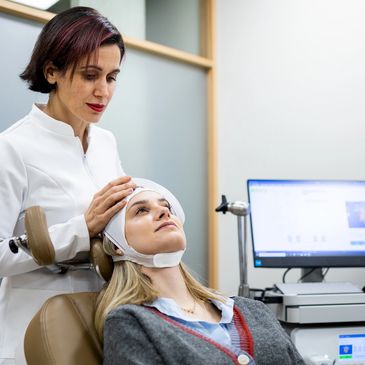
How it works? TMS uses magnetic pulses to excite (or inhibit) brain activity near the scalp.
How Long Does it take? TMS can be effective in just 3 minutes a day. Some protocols can last up to 18 minutes, depending on the patient.
How many treatments are necessary?
TMS approved protocols.
How it works? TMS uses magnetic pulses to excite (or inhibit) brain activity near the scalp.
How Long Does it take? TMS can be effective in just 3 minutes a day. Some protocols can last up to 18 minutes, depending on the patient.
How many treatments are necessary?
TMS approved protocols.
A standard 6‑week TMS protocol is the traditional, FDA‑cleared approach for treating major depressive disorder. It involves one brief (3 minute) session per weekday over 4–6 weeks, typically totaling 30 treatments. This steady, repeated stimulation is designed to gradually strengthen neural pathways involved in cortical regulation, allowing the brain to build over time. Research consistently shows that this protocol is safe, well‑tolerated, and effective, making it the most widely used and accessible form of TMS today

A one‑day TMS protocol is an accelerated form of transcranial magnetic stimulation designed to condense what is normally a 4–6 week treatment course into a single intensive day. Early research on approaches like the ONE‑D protocol shows that patients receive 20 carefully timed iTBS sessions over roughly 9–10 hours, aiming to take advanta
A one‑day TMS protocol is an accelerated form of transcranial magnetic stimulation designed to condense what is normally a 4–6 week treatment course into a single intensive day. Early research on approaches like the ONE‑D protocol shows that patients receive 20 carefully timed iTBS sessions over roughly 9–10 hours, aiming to take advantage of the brain’s short‑term windows of heightened neuroplasticity
The goal is to make TMS more accessible for people who can’t commit to daily visits, while still delivering meaningful symptom improvement. In small early studies, accelerated protocols have shown promising response and remission rates—over 90% response and 75% remission in one ONE‑D study—though larger controlled trials are still needed to confirm long‑term effectiveness and safety

A 5‑day accelerated TMS protocol delivers an entire course of treatment in a single intensive week, typically 10 short iTBS sessions per day for a total of 50 sessions. By condensing weeks of stimulation into a focused schedule, this protocol aims to harness stacked neuroplasticity effects while offering a practical option for people who need fast relief or can’t commit to a 6‑week course.

Dr. Resnick is an expert diagnostician and holds a Diplomate status and Board Certification in Chiropractic Neurology and Electrodiagnostics. He has fellowship status with the international academy of chiropractic neurology & ACFN.
Dr. Michael Nemytov is a neurologist and has been in practice for more than 20 years. Dr. Michael Nemytov accepts Medicare, Aetna, Cigna - see other insurance plans accepted.
Jennifer DeSetto is a board-certified Psychiatric Mental Health Nurse Practitioner, credentialed by the American Nurses Credentialing Center (ANCC) to provide psychiatric care across the lifespan, treating children, adolescents, and adults. She brings a patient-centered, evidence-based approach to the evaluation and treatment of mood, anxiety, trauma-related, and neuropsychiatric conditions. Jennifer earned her Master of Science in Nursing from Molloy College in 2013, where she completed advanced clinical training in psychiatric assessment, psychopharmacology, and treatment of mental health conditions. She has over a decade of extensive experience in psychiatric medication management and therapeutic care across diverse clinical settings. She has a special interest in women’s mental health and post-traumatic stress disorder (PTSD) and is known for her compassionate, collaborative style that emphasizes individualized care, patient education, and long-term wellness. Jennifer works closely with the neurosurgical and clinical team to support patients undergoing Transcranial Magnetic Stimulation (TMS) therapy. Her role includes comprehensive psychiatric evaluations, treatment optimization, and ongoing monitoring to ensure safe, effective, and coordinated care throughout the TMS process.
Jennifer is committed to expanding access to innovative, non-invasive treatment options and helping patients feel informed, supported, and empowered throughout their care journey.
Dr. Lamantia has a Masters in Neuropsychology Rehabilitation, NOCA Accredited training in Clinical Neurology, is a Registered Psychometrist with proficiency in Neuropsychological testing and TMS therapy,

The motor cortex is the area of the brain where the neurons of the corticospinal tract can easily be excited with non-invasive magnetic pulses machines. The amount of stimulus required to activate the brain is unique in each of us, and can vary as the brain neurons becomes aggravated or depressed. We call this measurement the "Motor Threshold".
Testing of the brain using Evoked Potentials provides a window into individual brain circuits;
VEMP, BAER- Ascending and Descending brainstem pathways
VEP- Visual cortical pathways
EEG- Cortical brain activity
SSEP- Dorsal Column pathways
Non-invasive Psychometric testing of brain function allows for a comprehensive functional assessment of the mental state during the time of the test administration.
Fact: Brain health can be monitored by testing balance, postural reflexes and eye movement function.
Fact: Post Concussion Syndrome and other neurodegenerative conditions are commonly associated with, dizziness, posture imbalance, blurry vision, headaches, and sound or light sensitivity due to dysfunction in neural circuits.
Prism therapy with Motor Targeting can create a lasting improvement in the symptoms associated with Spatial Neglect. the Kessler Institute Prism Adaptation Therapy (KT-PAT) has been shown to be clinically reduce left sided neglect post Stroke and Head injury